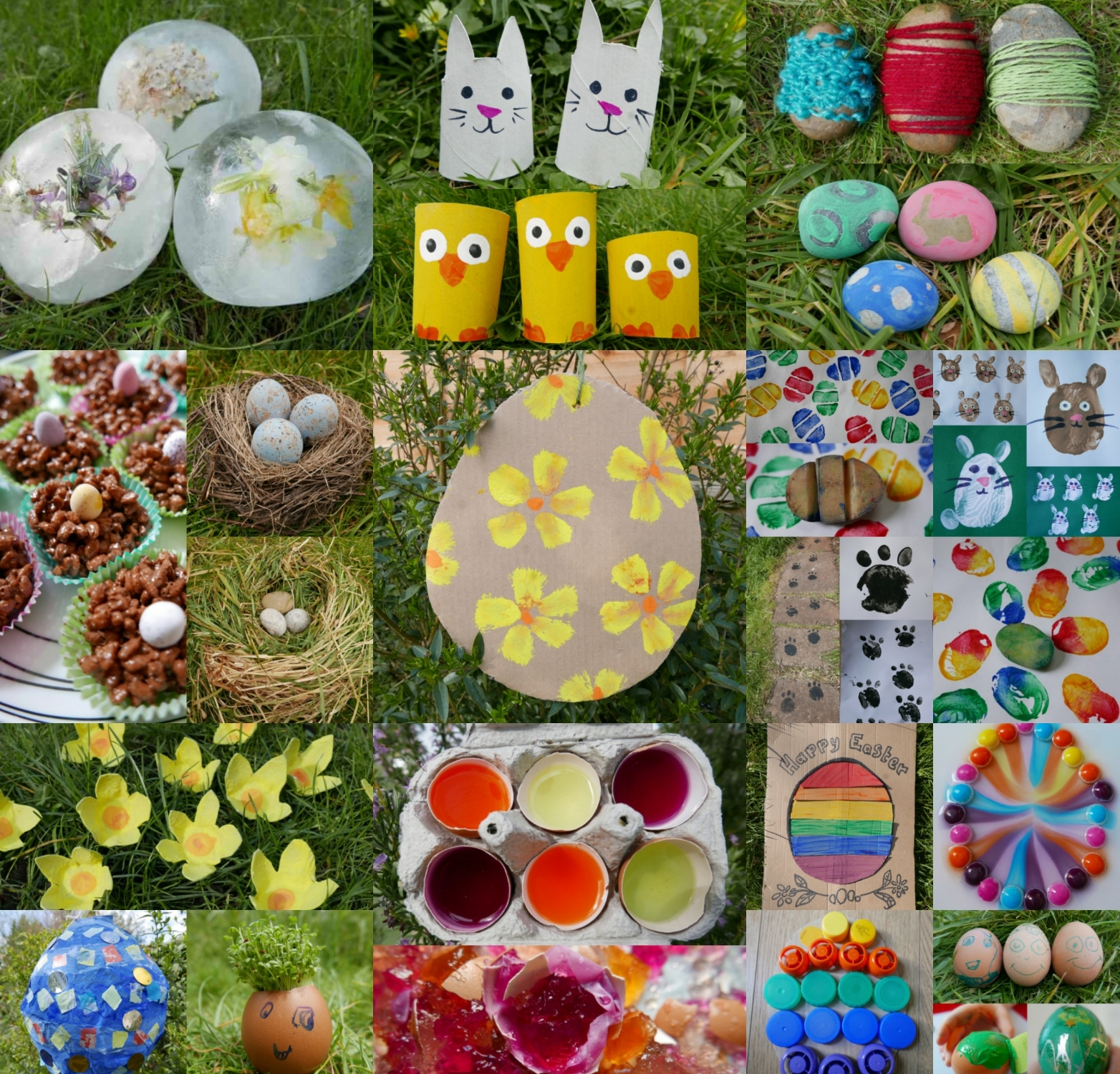
30 fun and easy Easter crafts, games, recipes and activity ideas, that children of all ages can explore and enjoy. From science and sensory to arts and crafts. And the best bit is that most of them are made using recycled materials you can find around the house or garden.
1. Jelly filled egg shells
Jelly is great for sensory play as it’s tactile, edible, smells great and also very versatile. All you need to do to make jelly eggs for exploratory play is to make up some jelly and pour it into clean washed out egg shell halves (leftover from cooking or baking). When your jelly eggs are set and ready to play with simply set them out on a tray or in an egg box for the children to explore and enjoy.

Children will love scooping the jelly out of the eggs with spoons or crushing and squishing the eggs in their hands. If you also add in some bowls or pots they will happily scoop, squish and play around with the jelly for ages afterwards. It looks messy but we found the jelly is actually quick and easy to wash off afterwards.

2. EASTER EGG HUNT DECORATIONS
We hate to waste anything and recycling and reusing materials is one of many small things we can all do to help the environment. So instead of chucking used cardboard boxes we like to find ways to use them in crafts and activities.

Making your own Easter eggs for an Easter egg hunt (or to use as decorations) is an easy activity to do using recycled cardboard from boxes or packaging and pens or paint. Simply cut Easter shapes out of cardboard like eggs, rabbits or chicks.

Then the children can have fun decorating the cardboard shapes using paint, pens. You could cover them in patterns, stripes, spots, flowers, pictures or even rainbows. How about finger painting , hand printing on potato printing onto the cardboard as well,

The children could also use cut up pieces of scrap paper, card, tissue paper or fabric to collage onto the cardboard shapes. It’s fun making mosaic pictures and patterns using the scrap pieces. Whichever way you choose to decorate your eggs when you are finished they are perfect to use for Easter egg hunts for the children to find. You can thread string through the top to hang them up or simply place them on the ground to be found.

3. Cardboard tube Easter bunnies
We hate to waste anything and recycling and reusing materials is one of many small things we can all do to help the environment. So instead of chucking old cardboard tubes we like to find ways to use them in crafts and activities. It is really easy to make some cute little Easter bunnies using just a recycled cardboard tube and paint or pens. You just need to cut some simple rabbit ears into the top of the tube and then paint or colour them in. Finally stick, paint or draw on the rabbits eyes, nose, mouth and whiskers. You can then use your Easter creations as a decorations, story props, napkin rings or even fill them with sweets or presents to give as gifts.

4. Cardboard tube Easter chicks
Cardboard tube Easter chicks are even simpler to make. You just need to cut the tube into 2 or 3 pieces then paint them yellow.. Finally stick, paint or draw on the chicks eyes, beak and feet. You can then use your Easter creations as a decorations, story props, napkin rings or even fill them with sweets or presents to give as gifts.

5. Cardboard tube spring flowers
Spring flowers made from cardboard tubes also work well but they are a little more fiddly to cut. To make some spring tulips you will need to cut two triangles into the tops of the tubes and then cut the corners at the bottom of to give your flowers a rounded edge. Finally cut some stems and leaves out of scrap paper, card or fabric to add to your flowers. You can then use your Easter creations as a decorations, story props, napkin rings or even fill them with sweets or presents to give as gifts.

6. EASTER THEMED POTATO PRINTS
Potato printing is a simple activity for children of ages, all you need is a potato cut in half, a bit of inspiration and some paint to get started. You can find lots of easy Easter potato print ideas here for inspiration. From cute bunnies and paw prints to bright Easter eggs and chicks.

7. SENSORY ICE EASTER EGGS
You can use a balloon to make some beautiful ice Easter eggs for sensory play and exploration. To make a plain ice egg simply stretch the neck of a balloon over a tap and hold it firmly in place whilst you semi fill the balloon with water. Tie the end up securely and freeze the water filled balloon overnight. When your water is fully froze you can cut and peel the balloon off to reveal a perfect little ice egg.

You could add an extra sensory element to your ice eggs by going on a nature hunt outdoors, exploring and looking for materials like herbs, leaves, and flowers. *Pretty please don’t pick any wild flowers, especially in spring as they an early source of food for pollinators, only collect ones you have grown yourself or fallen ones you find on the floor. Carefully push the materials through the neck of the balloon before you fill it with water to freeze.
You can also easily add colour to your eggs using food colouring or paint, or even add in add in some scented oils (taste and skin safe) like peppermint for an extra sensory element. Simply squirt the colour or scent into the balloon first before you fill it with water, tie the neck securely and shake it well before you place it in the freezer.

Or you could place a small toy figure or animal in the balloon. Then the children can have fun releasing whatever is trapped within the egg. Either by pouring warm water over the surface till the ice melts enough to free it, or by putting the egg in a bowl of warm water.

8. EASTER EGG NATURE HUNT.
Another easy activity using an egg shape cut out of cardboard. You can decorate the egg first (we coloured ours in) or leave it plain. All you need to do is then tape double sided tape across the egg (or doubled up Sellotape).

You can then collect as many natural objects as you can find to stick to the tape. Things like leaves, stones, grass, bark and flowers. *Pretty please don’t pick any wild flowers, especially in Spring as they an early source of food for pollinators, only collect ones you have grown yourself or fallen ones you find on the floor.
9. Wrapped stone eggs

A great activity for developing fine motor skills in young children that’s also very therapeutic for older children. Simply wrap wool, string, ribbon, thin strips of fabric or even long grass round some oval shaped stones or pebbles to make decorated eggs.
10. EASTER PAINTED PEBBLES.

You can easily find a variety of pebbles to decorate in a garden, park or on a nature walk. All you need then is some paint or permanent markers and a little imagination to paint, draw and create fun designs and pictures. Click here to find out more.

Once you have finished painting your pebbles you could hide them in your garden and have an Easter egg hunt use them as counters for games like noughts and crosses, snakes and ladders or even checkers.
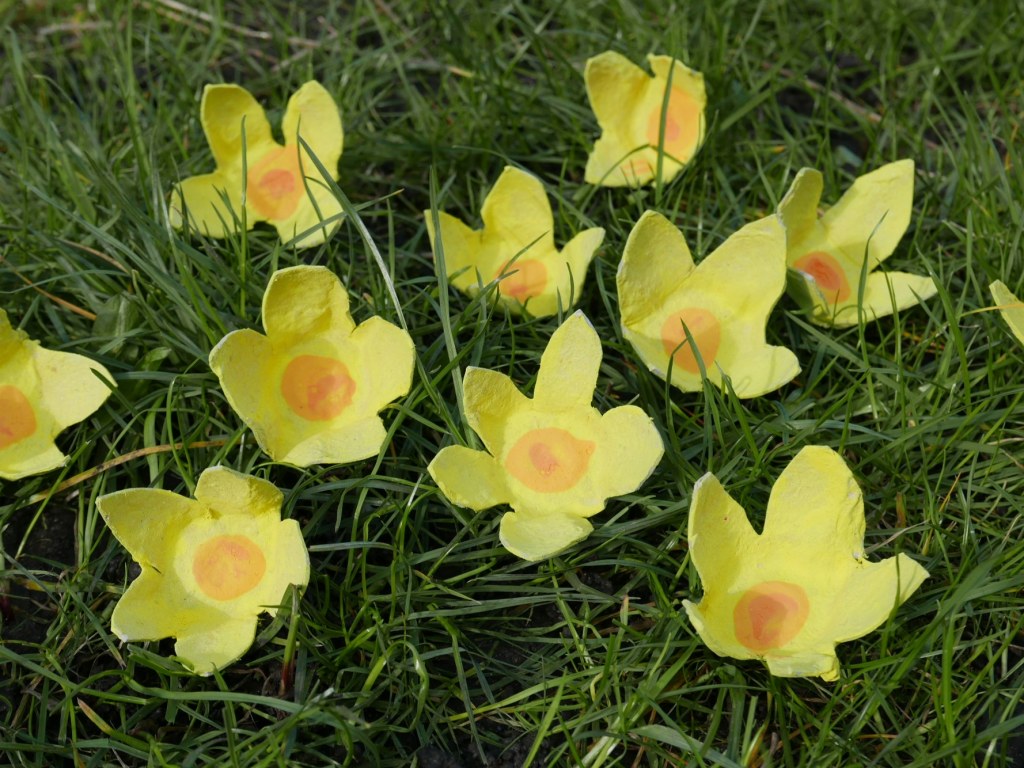
11. EGG CARTON SPRING FLOWERS
You can cut easily egg carton centres into simple flower shapes. The children can have fun decorating them using paint, pens or collage. How about painting them yellow and orange like daffodils or other bright colours like crocus flowers and tulips.

You can use the finished flowers as loose parts, play props, decorations or even use them to make Easter headbands and bonnet decorations.
12. Dissecting daffodils
Dissecting daffodils* is a great way to learn about the anatomy of flowers. First you need to draw or print out a simple image of a flower onto cardboard or paper and then label all the different parts of anatomy. There is a great free download printable sheet you can use here. Next you can cut the daffodil in half and see if you can find and match all of the parts in the flower to the parts in the picture. *Pretty please don’t use wild flowers, only use flowers you have bought or grown yourself.

This is a great opportunity to stimulate conversation about pollination and how flowers attract insects using bright petals and sweet smelling nectar. Then you can talk about how the insects brush against the pollinating parts of the flower picking up pollen that then gets distributed to all the other flowers and plants the insects visit afterwards. Did you know that a third of the food we eat comes from plants that rely on pollination. Even medi
13. PAPERMACHE EASTER EGG PIÑATAS
Paper mache Easter eggs are fun, cheap and easy decorations to make. It’s a great way to recycle newspapers and you can also fill with sweets to turn them into piñatas for party games. Click here to find a step by step guide to making your own.

14. Sensory Easter Oobleck
Oobleck is great sensory fun for children of all ages. All you need to make it is cornflour and water but you can also add colour and extra sensory elements with food colouring, scented herbs, flavoured oils, flowers and other natural materials.
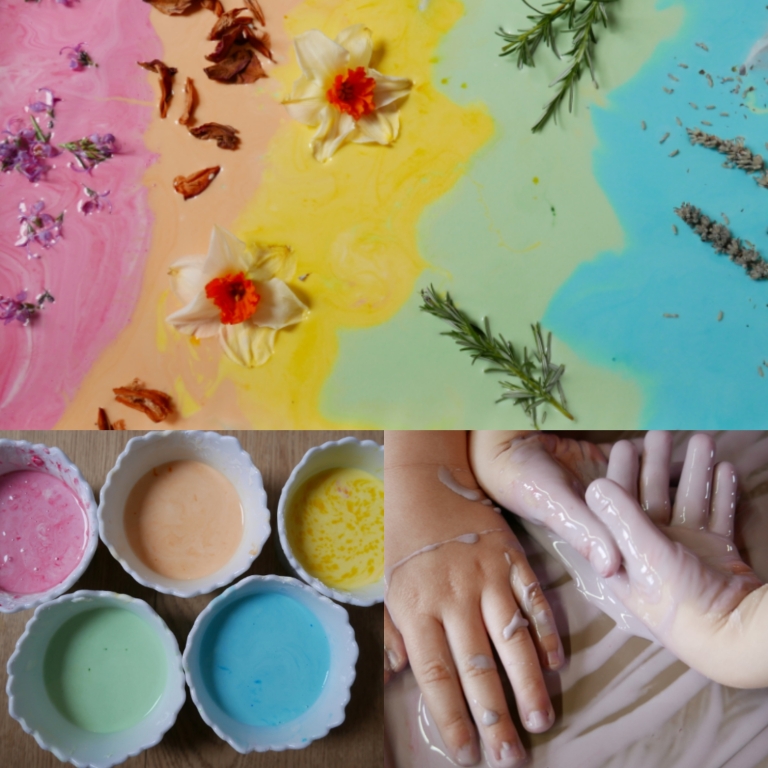
Oobleck is named after a Dr Seuss story and its a non-Newtonian fluid. This means it acts like a liquid when its relaxed or being poured, but when you push, squeeze or exert any kind if force onto it, it becomes temporarily solid. This makes it a fantastic material for tactile and sensory play. It’s also taste safe and non toxic (although I wouldn’t let any children try to actually eat it.)
To make basic Oobleck all you need is cornflour and warm water. Simply add and stir small amounts of water into the cornflour until it forms a thick gloopy liquid. You can also add colour to your ooblock by mixing in small amounts of food colouring or non toxic paint. How about making a rainbow by mixing up several colours and then carefully pouring them one by one into a tray.
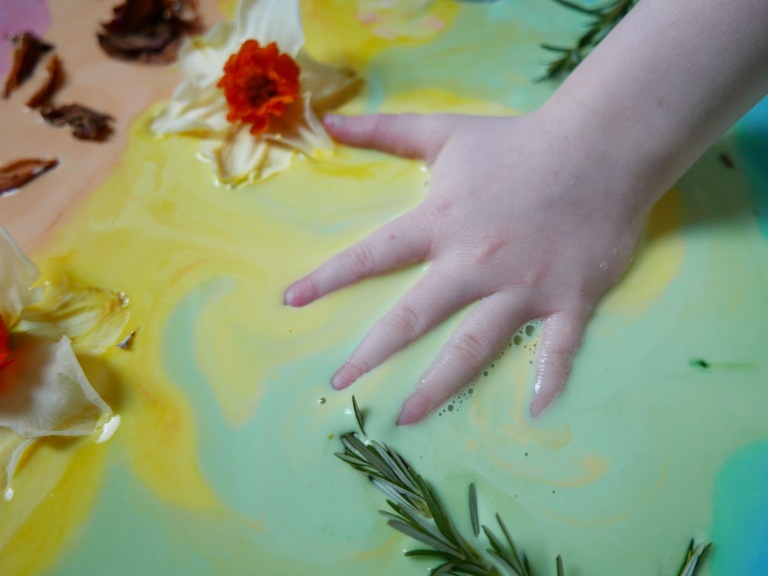
You can also add additional tactile and sensory elements to the oobleck using scented herbs like mint, rosemary, basil, sage and thyme. Flowers like lavender, daffodils and rose petals are also great for sensory play. Or how about trying scents using spices like ginger and cinnamon, food flavourings like mint and vanilla, non toxic scented oils like lavender oil or even fresh citrus fruit peel, slices and or juice.
15. EASTER HEADBANDS
Easter head bands are simple to make and are a nice alternative to bonnets. All you need is a strip of paper or card as the headband base. We cut ours out of green paper and made it spiky to look like grass.

Then the children can colour, paint or stick decorations onto the band. We used the egg carton flowers and mosaic eggs we had made previously as decorations. You could then wear the head band or slip it on top of a hat to turn it into an Easter bonnet.

16. BOTTLE TOP MOSAICS.
A great loose parts activity that encourages imagination and helps develop fine motor skills. All you need is some recycled bottle tops. Milk bottle tops in particular work well for this but you can use any type or colour of bottle. (Just please be aware of the choking hazard and make sure children are supervised at all times.)

The children can play with and arrange the bottles tops into any shape, pattern or picture they like. Or you could cut out some cardboard egg shapes as prompts. You can glue the finished designs to the cardboard or leave them loose to play with again.

17. CRESS EGGS
Growing cress hair is a fun and easy activity for children of all ages. All you need is a handful of cress seeds, a piece of tissue, a pen and an empty egg shall or recycled pot. First crumple up the tissue and carefully push it into the bottom of the egg shell or pot. Next sprinkle in a handful of cress seeds and give them a light watering. Finally the children can draw a funny face onto the side of the egg or pot. Now all you have to do is pop it in a sunny spot and watch and wait as your little egg or pot persons cress hair begins to grow. Cress grows quickly and within a day or two you should be able to see the shoots and roots already emerging. Keep the tissue damp with a light watering every few days and your little figure should have a fine head of cress hair within a week.

The children can then have fun giving their little figure a haircut with safety scissors as well as enjoying eating the cress in sandwiches and salads.
STEM Activity: Older children could also set up a science experiment to test the conditions the cress grows in. For this they will need multiple pots (or eggs). This time they need to mark a number onto each figure and then write down the same numbers on a sheet of paper so they can track the results. This time they sprinkle the cress into each pot but then do a variety of the following.

- See if the cress grows without water. (Don’t water the cress at all)
- See if the cress grows without light. (Put the cress in a dark place without any light)
- See if the cress grows without air. (Put the cress in a small bag, suck out as much air as possible with a straw and seal the bag)
- See if the cress grows better in warm or cold conditions. (Put one in a warm place and another in a cold place)
When you have finished talk about the results and what plants might need to grow and thrive.
18. EASTER EGG PUZZLE.
It’s so incredibly easy to make your own Easter egg shaped puzzle using just cardboard, glue and paint. First you need two pieces of cardboard cut to equal size. Cardboard boxes cut up work perfectly for this.

Fold one of the cardboard pieces in half. Then cutting from the edge of the fold, cut half an egg shape. Cut the egg shape into as many puzzle pieces a you like. We cut ours into stripes.

Now you you can paint each puzzle piece a different colour and then leave them to dry. Whilst you are waiting you can glue the square piece with the egg shaped hole onto the other original piece of cardboard. When your puzzle is dry its ready to play with. Have fun arranging and fitting the pieces into your puzzle.

19. Stained glass Easter biscuits
Stained glass Easter biscuits are so fun and simple to make. This is a such an easy recipe that even children will be able to join in making these. You can give them as gifts, hang them up as decorations or just enjoy eating them yourselves. Click here to find the full recipe.

20. DECORATING CHALK EGGS
We love playing with chalk. It’s cheap cheerful, easy to wash off and children can spend hours drawing, colouring and scribbling away.

Chalk drawings can also makes a great invitations to play. You could draw simple egg shapes and ask the children to decorate them. Or ask them to draw and decorate their own eggs. Click for more easy to set up play ideas using chalk.
21. SKITTLE EASTER SHAPES
A great activity for developing fine motor skills. Ask the children to arrange skittles on a plate in Easter themed shapes (eggs, rabbits ect). When they have finished carefully pour some warm water onto the plate of skittles.

As the warm water melts the coloured coating on the outside of the skittles it spreads out across the water. If you place the skittles in a circle you can create a beautiful rainbow of colours that run together as they meet in the middle.
22. EGG AND SPOON RACES AND EGG ROLLING
Hard boiled eggs are great fun to decorate and use in egg and spoon races. You can also have fun rolling the eggs down hills, slopes or ramps.

All you need is some hard boiled eggs (we boiled ours for 12 mins). When the eggs have fully cooled the children can have fun decorating them using paint, pens or collage.

23. MAKE YOUR OWN BIRDS NEST AND EGGS
It is really simple to make your own basic birds nest using long grass gently twisted or woven into a circle. However if you don’t have any long grass you could use regular grass, leaves, sticks, mud or long stemmed plants to make your nest. Simply form a circular nest shape out of the materials.

You can then place ‘eggs’ in the centre of your nest. We used pebbles as pretend eggs but you could use anything you like from crumbled up paper balls to hard boiled eggs. You could even have a go at painting them to match the colour and patterns of wild birds eggs. You can also make a more permanent nest to keep and use as a learning guide or for pretend play. They are surprisingly simple to make and required very few materials. You can find a full photo guide to making one here.

24. NAKED EGG SCIENCE EXPERIMENT
Making naked eggs (where you remove the outer shell of an egg without breaking the egg) is a simple and fun science experiment you can easily do, using just three things you can find in the kitchen. Eggs are made up of several parts: the shell which is porous and lets air and moisture in, the inner and outer membranes which protect the egg from bacteria, an air pocket and the egg white which provides cushioning and shock absorbance and the egg yolk which contains all the nutrients a little chick needs to grow. As the shell is made of calcium carbonate its possible to dissolve it in a mild acid like lemon juice or vinegar to remove the shell. (You can a full guide to making naked eggs here.)

25. Learn more about birds
Did you know that there are over 10,000 species of bird in the world? Birds play a vital and varied role in eco-systems and the environment by spreading seeds, pollinating plants, recycling nutrients, fertilizing marine environments, controlling pest populations, clearing up carrion and preventing the spread of disease. You can find lots of amazing facts and information about these wonderful creatures here along with 30+ bird related activity ideas for children of all ages to explore and enjoy here.

26. LOLLIPOP STICK PUZZLE
Another great activity for developing fine motor skills and problem solving. All you need is some lollipop sticks and pens or paint. Simply paint or draw an Easter picture onto the sticks. The children can then have fun arranging the sticks to put the picture together.

27. MAGIC COLOUR REVEAL
All you need for this activity is two sheets of kitchen roll. On one sheet draw an egg outline or a simple Easter themed picture. On the other sheet trace the outline and then colour it in. Lay the outline sheet over the coloured in picture. Now you should only be able to see the blank outline. When you place both sheets together into a plate or tray if water the colour will magically appear on the picture.

28. EASTER NEST CAKES
Easter nest cakes are a fun and easy thing for children make. They require no baking (although an adult will need to help them melt the chocolate) and you only need a few ingredients. Click here to see our simple fun recipe.

29. SALT DOUGH AND PLAY DOUGH EGGS
You can use coloured salt dough and playdough to make egg shapes for the children to play with and decorate.

You could even press natural materials into the salt dough eggs to make natural patterns and imprints. You can find an easy guide to making your own coloured salt dough by clicking here.

30. EASTER BASKET.
And finally how about making your own Easter basket. We used an old ice cream tub and covered it in coloured paper and stickers then added a paper handle. But you could use any box, pot or tub you like and paint, draw or collage on paper, card, fabric, tissue or natural materials.

If you like this you might like to try:
22 Rainbow crafts, experiments and activity ideas

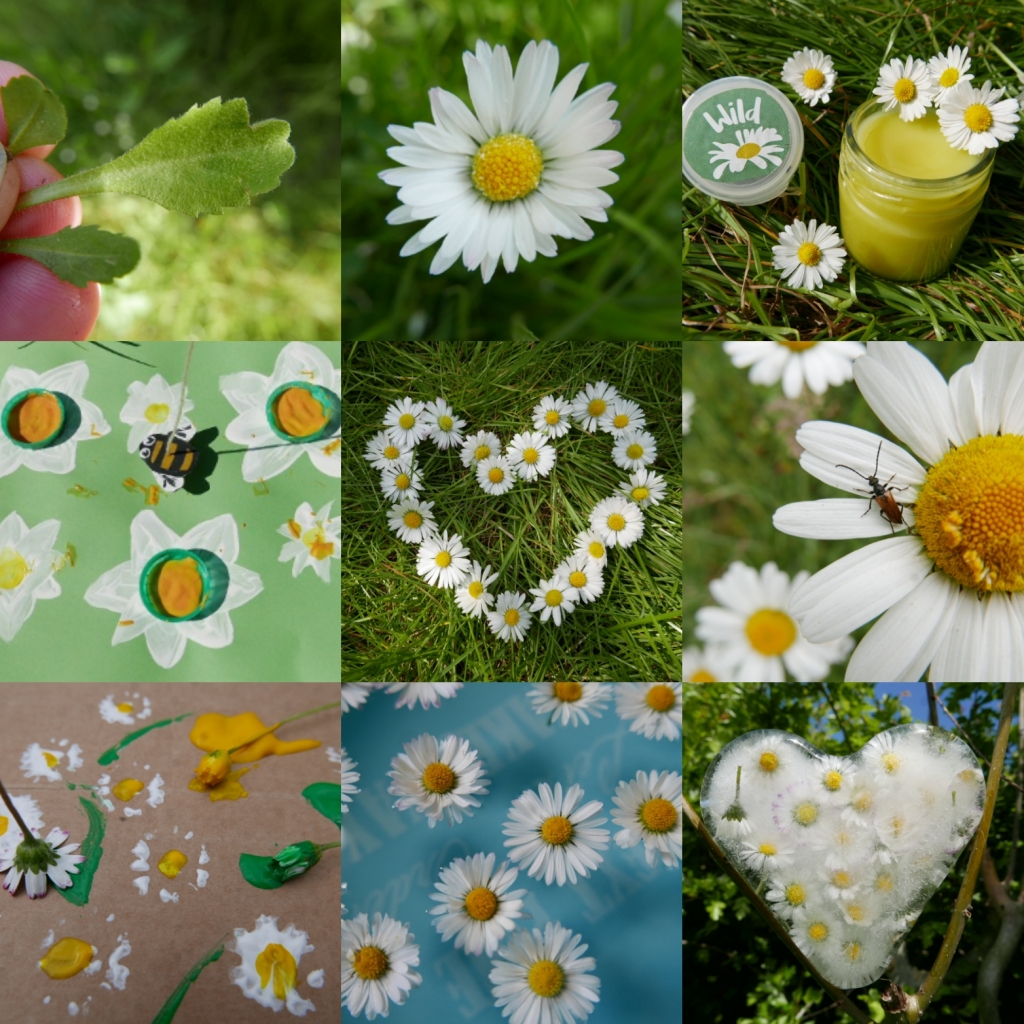
11 Daisy activity ideas and recipes
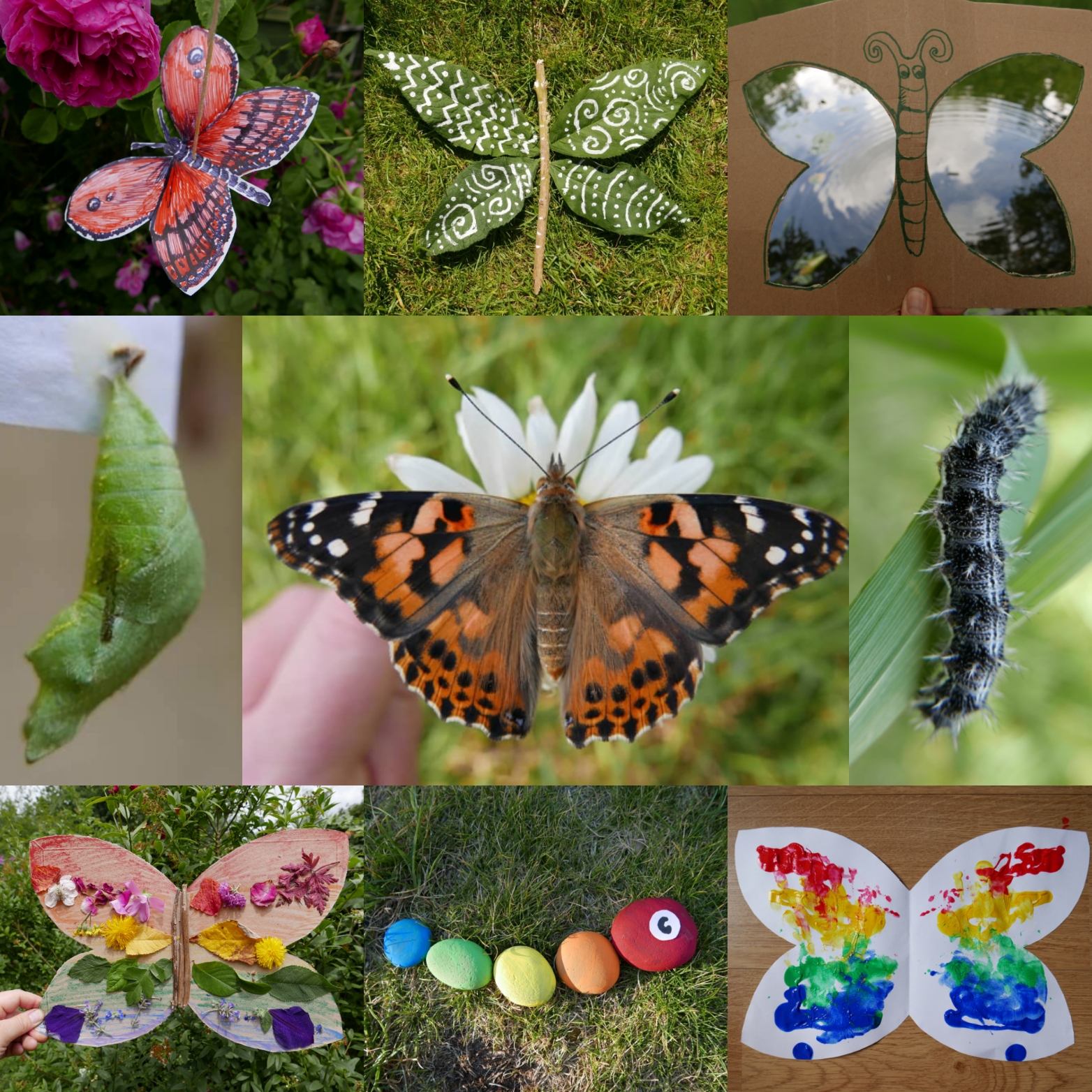
20 Butterfly and caterpillar activities + fun facts
.
 Childsplayabc ~ Nature is our playground
7 thoughts on “30+ Easter crafts, games and activity ideas”